Juhani Itämies, who put together the upcoming summer exhibition at Olkiluoto, has been a butterfly enthusiast since childhood
This coming summer, the Olkiluoto Visitor Centre will provide information on butterflies as well as nuclear energy. This is thanks to Juhani Itämies, who has spent his entire academic career working with butterflies, and who happens to be not only one of the country’s leading butterfly experts, but also originally from Rauma and a current summer cottage owner at Olkiluoto.
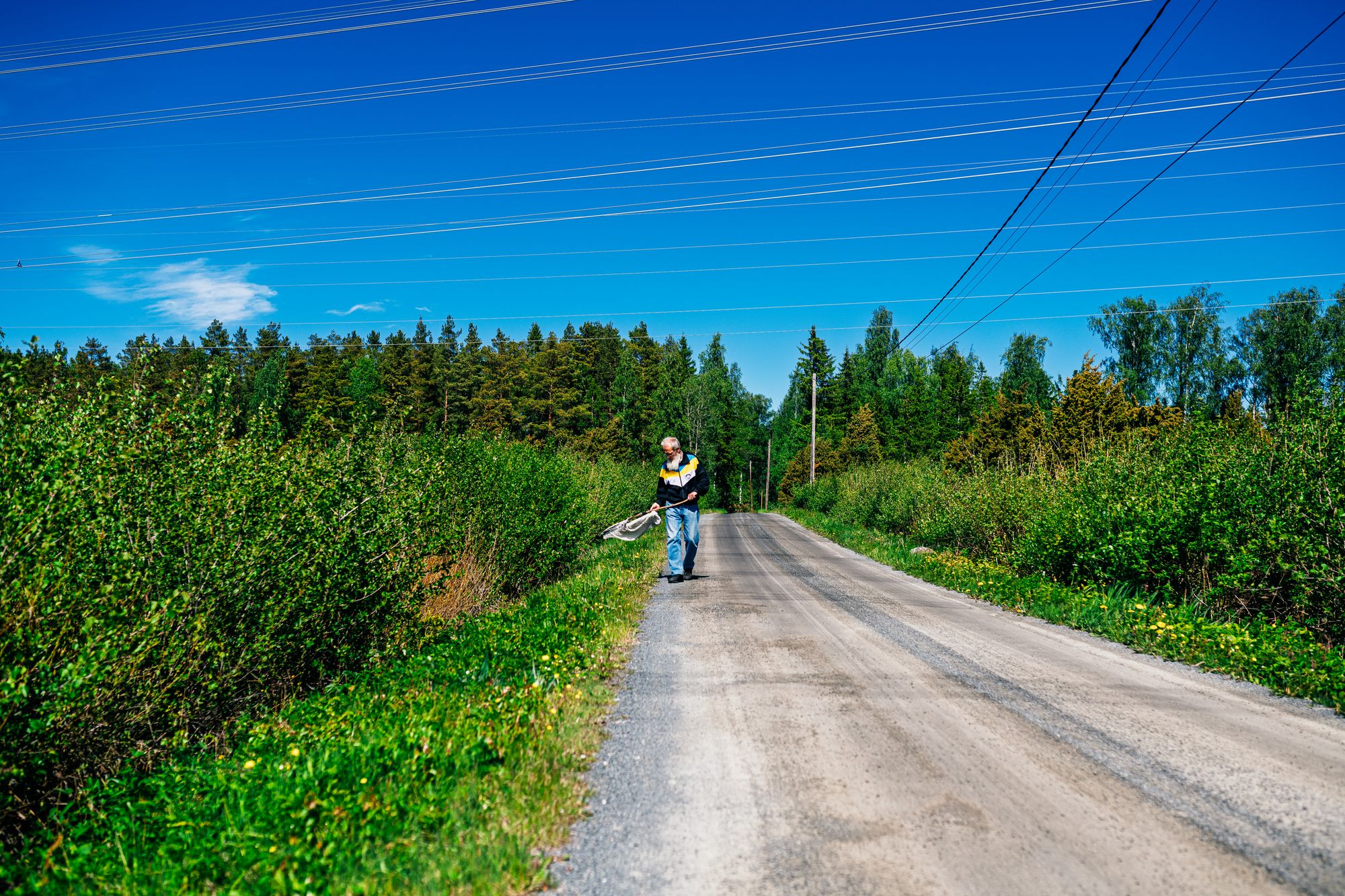
As it happens, a summer cottage was also a significant factor in shaping his career. The summer cottage of Itämies’ childhood family on Kolmas Petäjäs, Rauma, which was later lost to the port expansion, served as a good springboard for getting to know nature.
- My childhood summers were spent largely at the cottage. When school ended, we went there, and when school started again, we came back, Itämies explains.
Good use of curtains
Since there was no PlayStation or internet, Itämies had to find things to do in nature. He started collecting butterflies early on. His first net was sewn by his mother. It was made from old curtains, Juhani recalls. He attached it to a metal loop he found, and then just started swinging it around.
His hobby did not stop at just catching. Very early on, Juhani decided to try raising butterflies as well. However, there were some lessons learned before achieving mastery.
- The first batch of larvae I found was literally fried when I left them in the attic.
Subsequently, he picked up the tricks for butterfly raising, and the populations grew quite large at times.
Juhani’s progress was somewhat hampered by the fact that he did not come across any other enthusiasts in the Rauma region when he was a boy. However, the library and its books on butterflies became very familiar to him.
- I was a regular borrower for a few of the books, but I rarely had to renew them because there really wasn’t much demand for them.
Heading north for studies
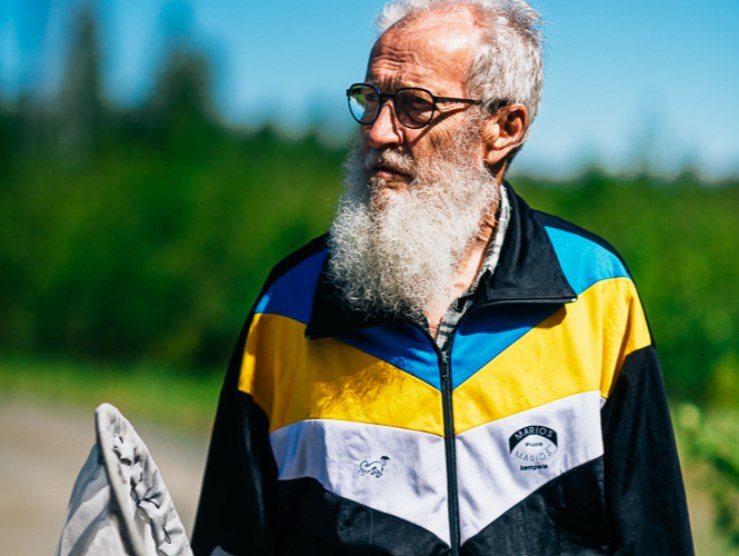
Itämies jokes that even school could not kill his passion for insects, even though his performance in lower and upper secondary school did not exactly promise an academic career. His interest in nature was here to stay.
- I knew I wanted to study biology, he says.
Juhani’s matriculation examination grades were so lacklustre that it was not even possible for him to take the university entrance exams in Helsinki or Turku. The solution was found further north, because in Oulu, there were no restrictions on taking the entrance exams. The exam itself went better than well.
By chance, the questions in the exam were right up my alley. There were a lot of butterfly topics, and I got almost the maximum points, Itämies says.
A dissertation that took three outboard motors
Studying at university was enjoyable, and the choice of field turned out to be absolutely right. Since there were only a few scientists specialising in insects at the University of Oulu, Juhani got his foot in the academic door well before his graduation. He started as an assistant while he was still a student, and it was clear during his master level studies that he would push forward.
His doctoral studies brought Itämies back to his home turf. He chose the butterflies of the Rauma archipelago as the topic of his dissertation. The field research was comprehensive, as the survey area included about 60 islands of various sizes.
- I went through three outboard motors before I had all the data, he says.
The research specifically examined the abundance of species on the different islands, so it is unlikely that there is anyone in the entire universe who knows the butterfly population of the Rauma region better than him.
Juhani’s university career also included a professorship, but he spent the longest time working at the University of Oulu Zoological Museum, first as curator and later as chief curator. The work combined both his passion for collecting and scientific research in an excellent way.
Although Juhani has been officially retired from the university since 2008, butterflies have not been left on the sidelines. In fact, several longitudinal studies are currently under way, in which he also continues to do concrete fieldwork – or in this case, net work.
He has seen some winged creatures indeed, as Juhani says he has identified half a million butterflies in a giant study conducted in Lapland alone, which has lasted for 50 years.
Only one species missing from the exhibition
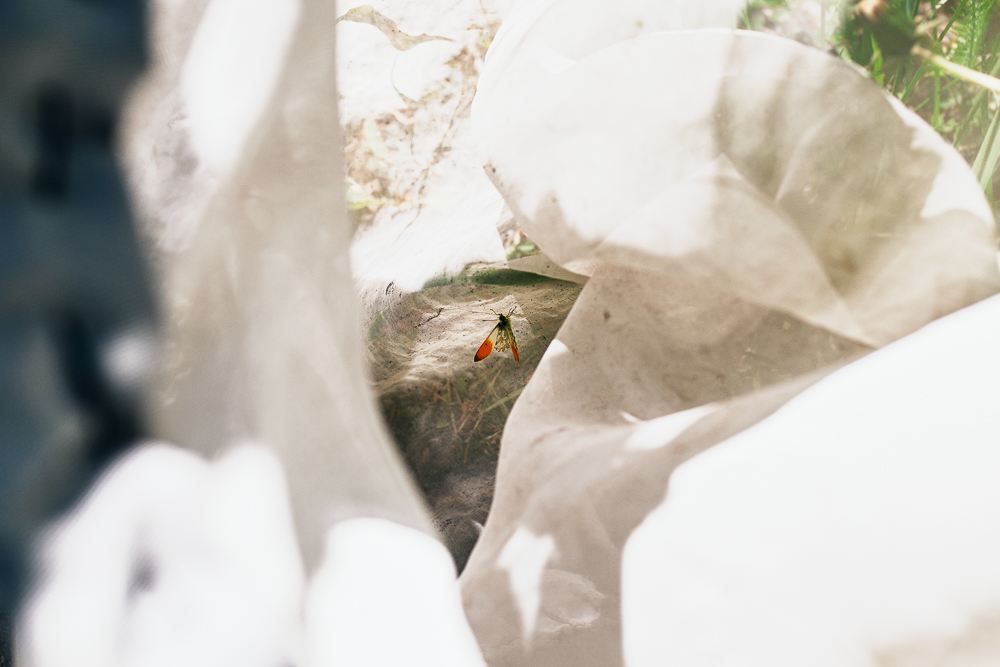
Itämies has also become intimately familiar with the butterfly population of Olkiluoto Island. The results of this work will be available to everyone during the summer, as an exhibition put together by Juhani will open at the Olkiluoto Visitor Centre on the first weekend of June, presenting all the species he has found except one.
According to Juhani, Olkiluoto is a fairly good area in terms of its butterfly population.
- There is diverse nature here, including forests, fields, meadows and roadsides. Actually, the only thing missing here is a larger marsh area, he says.
The exhibition features the 47 Papilionoidea species found at Olkiluoto, of which Juhani has collected all but one. The range of species is quite representative, as there are over 2,600 different species of the order Lepidoptera in Finland, including 123 true butterflies.
This number is subject to change, however, as Juhani Itämies admits that drastic shifts have taken place in the Finnish butterfly landscape over the past 25 years.
Among Papilionoidea, some species have become much more abundant, while others are becoming rarer. Among the species on display, there are a few that would not have been found in the early 2000s, but there are also those that would have been much more abundant in the past, he ponders as he presents the exhibition boards.
In the long run, butterfly populations are affected by climate change, which has resulted in species that previously appeared much further south, for example in the Baltic region, arriving in Finland.
- Since 2000, about a dozen new butterfly species have arrived here every year, he notes.
The species missing from the exhibition is the clouded Apollo, and the reason for that is obvious. This butterfly is very rare in the whole country and is therefore protected. While the other species are physically displayed in the showcases, the clouded Apollo is only included as photographs, albeit in numerous different shots.
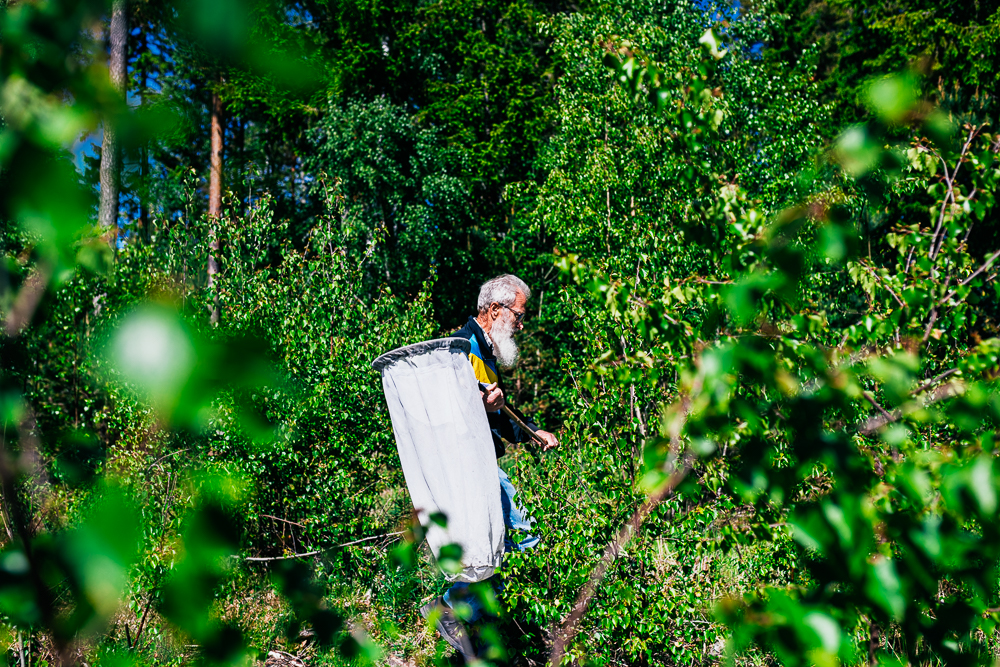
The current exhibition was originally the idea of local Lapijoki Waterways Management and Protection Association member Raija Vilponen. When it was suggested to Juhani, it was easy for him to get right down to work. For a man who says that he even checks the mailbox at his cottage with a butterfly net in hand, the threshold for such a project was quite low.
Juhani Itämies recommends the exhibition at the Visitor Centre to anyone interested in the topic. It will definitely teach you something.
- For example, you will learn that there are quite a few Lycaenidae species, or that many species thought to be the large white are actually not. I have also tried to compile things that would make it easier for anyone to identify butterflies, the researcher says.
He will also be giving a lecture on butterflies during the summer. One will be on Saturday, 6 June, when the exhibition will also be officially opened. If it is popular enough, there may be another appearance. At least his journey to give a lecture will not be long.
Butterfly numbers vary from year to year. The difference between a good and a bad butterfly year can be up to tenfold. This summer looks good in terms of butterflies, at least at Olkiluoto.
- It seems so, although I am wondering what effect the early spring might have had. However, the observations suggest that it is going to be a very good year for butterflies.
Therefore, you can probably spot them live too this coming summer. If you want to play it safe and see several species at once, or impress someone later with your increased butterfly knowledge, though, you should set your navigator to the Olkiluoto Visitor Centre.
The Day Butterflies of Olkiluoto exhibition opens at the Olkiluoto Visitor Centre on Saturday 6 June 2026. Join us at the opening from 12:00 – featuring a lecture by Juhani Itämies. Free entry to the exhibition and the opening event. See you there!
The butterfly exhibition is part of the Olkiluoto observation trail’s insect park, a project of the Lapijoki Lapijoen vesistöjen hoito- ja suojeluyhdistys (Lapijoki Waterways Management and Protection Association). The project has received EU rural development funding from the Satasilta Leader group. TVO is supporting the project and, in addition, provides a location and building materials for the insect park and the butterfly exhibition.
Text: Ville Kulmala
Photos: Tapani Karjanlahti