Green visitors from oil country
One cannot but find it interesting to find names of even politicians from Norway known for her oil and gas resources in the list of visitors to the nuclear power plant. But once you realise they represent the green party, which traditionally has had a reserved attitude towards nuclear power, you just have to ask if they have entered a wrong address in their navigator – or what on earth are they really doing in Olkiluoto?
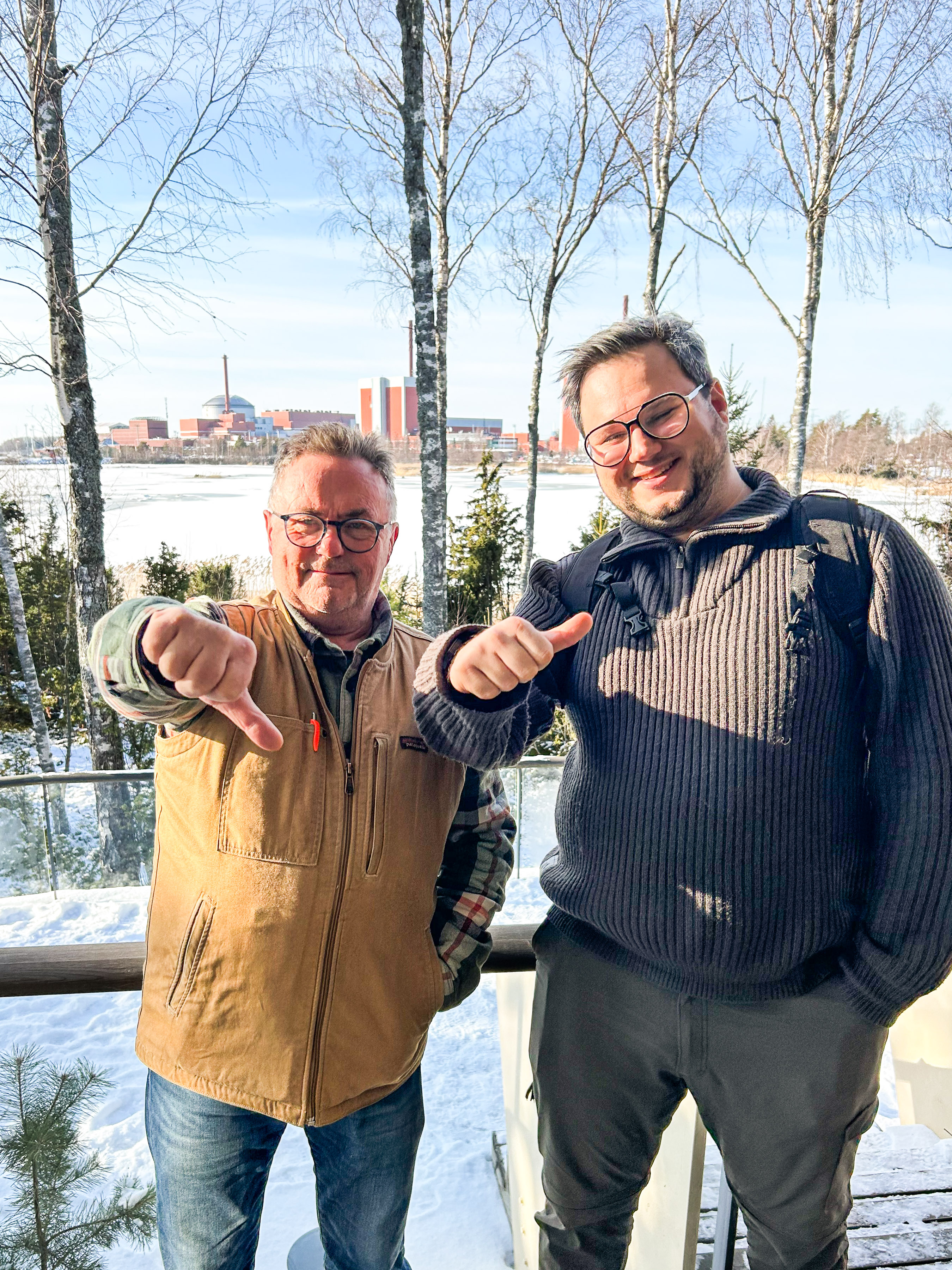
– We are here on a mission to learn. Norway will also need energy solutions of the future, and recently nuclear power has been forcefully brought up as one alternative, explains Jonas Ali Werket Ghanizadeh, one of the members of the six-strong delegation of the Green Party. Apart from Olkiluoto, the Norwegian team also visited the Finnish Parliament at the invitation of their Finnish sister party.
Norway – Gladstone Gander of energy
Nuclear has recently become a topic of discussion also in Norway. This may seem peculiar to an outsider, bearing in mind that, owing to her plentiful water resources, Norway has for a long time been one of the cleanest electricity producers in Europe.
However, the Norwegian economy is strongly reliant on revenue from oil. Not that oil has been used to any significant amount in electricity production for years, nor is it a valid alternative in the future either.
The challenge that Norway has to face is to meet the increasing electricity demand. Expanding hydropower capacity is politically difficult as more than 70 percent of all waterways suitable for energy production have already been exploited.
The development of wind power, too, has had its share of problems. Large wind power parks have faced considerable resistance, leading even to waves of protest. The most blatant example of this was the huge park with 150 wind power plants built in Northern Norway which was declared illegal by the Supreme Court of Norway in the spring of 2023. An that is just one example.
– For these reasons, it is important to look for alternatives. Fossil solutions will not do, Ghanizadeh emphasises.
A sceptic’s theses
Arne Rönning, another member of the delegation, has a more sceptical attitude towards nuclear power. The photo in this article also indicates the different views of the two visitors: while Jonas lifts his thumb up, Arne’s thumb points slightly downwards.
– It is hard to change one’s own attitudes. I have felt already since the 1970s that there is a limit to growth. I believe that the quest for continuous growth is a never-ending road and unfortunately, I see nuclear power as just an excuse to keep on increasing the consumption of energy, Rönning ponders.
He associates nuclear power with problems such as lost thermal output and the amount of waste that is generated.
– Although nuclear power produces no carbon dioxide, in my opinion the amount of other waste is still too high, he says.
The other side of the coin
Ghanizadeh nods as he listens to the thoughts of his fellow party member and admits also having been quite sceptical about nuclear power for quite a long time. At present his view is, if not completely clear, at least leaning in a positive direction.
– I am well aware that we represent a party where anti-nuclear power views have been in the majority – even being one of the reasons the movement was started. But an increasing number of our members see nuclear power as a solution and understand that climate actions cannot be implemented fast enough without nuclear, he says.
As reasons for the change in his own attitude, he mentions climate change and loss of nature.
– I wanted to become involved in politics to make a positive difference and the energy issue is the key in that respect. We are running out of time, he concludes.
What did the visit give?
Arne Rönning says straight up that he did not change his opinion – his nuclear power thumb remains pointing slightly down.
– But were it possible to limit the use of nuclear power to only mitigating climate change instead of just for a greedy quest for growth, it could be a worthwhile alternative.
Ghanizadeh, for his part, feels that his attitude towards nuclear power, already favourable before the visit to Finland, was further reinforced. He now has better arguments than before for the upcoming election debates.
– Everything I have seen here has strengthened my view that nuclear power could be one alternative also in Norway. Non-fossil Norwegian industry is a necessity in the future.
– Without it, industries will relocate to China or some other country, he says and points out that in that case climate would be the loser.
Ghanizadeh also appreciates the fact that the funding for the operation in Olkiluoto comes exclusively from private sources.
– I lean more to the left than right with many things, but I am also extremely sceptical about government mega-projects, he says.
Text and Photos: Ville Kulmala
Share